Process Documentation
Source.
Verify.
Archive.
The Talev methodology is a documented sequence of procurement, verification, and record-keeping steps applied uniformly across all product formulations. Each stage produces a written record that forms part of the permanent lot file.
01 — The Process
Six Stages from Origin to Archive
Supplier Identification
Candidate suppliers are evaluated against a documented set of sourcing criteria: geographic origin, facility classification, and prior lot performance. Only suppliers with established food-grade processing environments enter the approved list.
Chain-of-Custody Documentation
Each ingredient is accompanied by a full chain-of-custody record from point of origin to receiving. The record includes supplier contact, dispatch date, transport conditions, and lot reference. No ingredient enters the formulation process without this documentation.
Independent Laboratory Analysis
Every ingredient lot undergoes independent laboratory analysis confirming elemental concentration within the stated compositional range. Analysis is conducted by a third-party facility with no commercial relationship to the supplier. Results are filed under the lot code.
Formulation Composition
Ingredient ratios are determined against published nutritional research for each target micronutrient. The serving composition is fixed at the start of each formulation cycle and does not change between lots unless a revision is logged and archived.
Batch Coding & Labelling Verification
Each production batch receives a unique lot code. Labelling is verified against the certificate of composition before release. Any discrepancy triggers a hold and re-verification cycle before the batch enters the archive.
Archive & Revision Record
The completed lot file — including sourcing record, analysis result, composition sheet, and labelling sign-off — is archived under the batch code. Revision histories are maintained across all active formulations. Archive entries are available upon request.
02 — Sourcing Standards
Where Ingredients Come From

Talev operates a regional sourcing preference model. Where nutritional equivalence exists across multiple supply regions, priority is given to suppliers with shorter and more traceable chain-of-custody paths. Geographic origin is recorded in every lot file as part of the standard documentation sequence.
Active ingredients are sourced from documented suppliers, with each batch accompanied by a certificate of composition. Sourcing prioritises suppliers whose facilities maintain food-grade processing standards.
The approved supplier list is reviewed on an annual basis. Suppliers are removed if chain-of-custody documentation standards drop below the threshold set in the Talev sourcing protocol, or if independent analysis flags a concentration deviation.
03 — Verification
Independent Analysis at Every Lot
Elemental Concentration
Each batch undergoes elemental concentration analysis confirming that active ingredient levels fall within the declared compositional range. Results are retained in the lot file alongside the certificate of composition from the supplier.
No Commercial Relationship
Verification laboratories are selected specifically on the basis of having no commercial relationship with the ingredient supplier. This structural separation is documented and reviewed at each annual audit cycle.
Hold & Re-Verification
Any batch where analysis reveals a concentration outside the declared range is placed on hold pending re-verification. If the deviation persists, the batch is not released and the supplier is flagged for review.
04 — Nutritional Basis
Research-Informed Composition
Ingredient profiles in Talev supplements are selected based on published nutritional research and undergo independent batch verification for quality and labelling accuracy. Nutrient roles are described in accordance with well-established research on micronutrient function.
Talev products are nutritional food-supplements registered with the applicable local regulatory authority under food-supplement classification. Products meet compositional and labelling requirements for nutritional supplement categories.
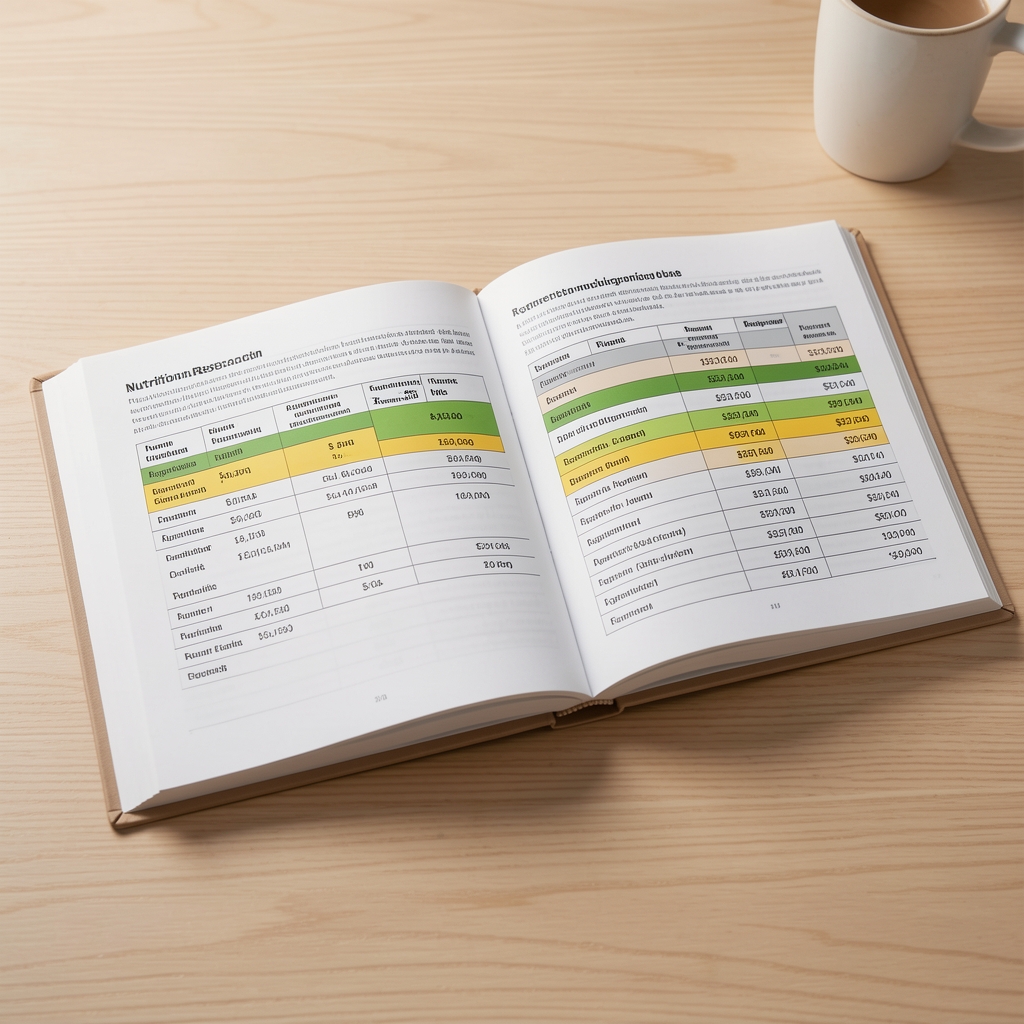
05 — Supplier Overview
06 — Frequently Asked
Methodology Questions
Every production batch undergoes independent laboratory analysis before release. There are no batches in the Talev archive that were released without a corresponding analysis result on file.
Lot records are available upon request via the contact form. Requests are processed within five working days. Records provided include the certificate of composition and the independent analysis result.
Food-grade processing refers to the handling, storage, and manufacturing conditions appropriate for ingredients intended for human consumption as nutritional supplements. Suppliers are required to document their facility classification as part of the Talev sourcing protocol.
Ingredient ratios are determined by reviewing published nutritional research on each micronutrient and establishing a serving composition consistent with recognised reference intake levels. Ratios are fixed at the start of a formulation cycle and do not change between lots unless a revision is logged.
We recommend speaking with a qualified wellness or nutrition professional before introducing any supplement to your daily routine, particularly if you have specific dietary requirements.